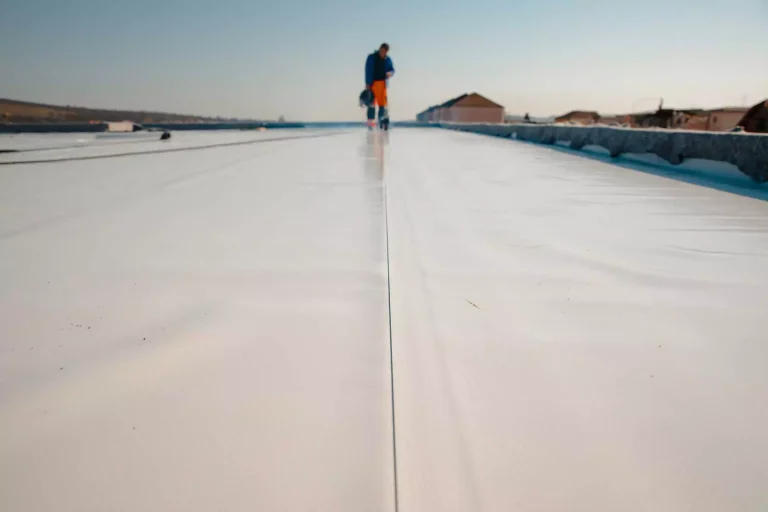
Rubber/TPO
A single-ply TPO membrane can reflect up to 87 percent of the sun’s energy, which puts it among the most energy-efficient roofing surfaces available for flat and low-slope buildings. That reflectivity, combined with strong seams and a resistance to punctures, has made rubber and TPO roofing a standard choice for commercial buildings, additions, garages, and modern homes with flat rooflines. At Tidal Roofing & Exteriors, these are the systems we install and repair every week, and understanding how they work helps you make the right decision for your property.
What Rubber and TPO Roofing Actually Are
Rubber roofing usually refers to EPDM, a durable synthetic membrane that has protected flat roofs for decades. It is known for flexibility in cold weather and a long service life. TPO, or thermoplastic polyolefin, is a newer single-ply membrane that combines the toughness of rubber with a bright, reflective surface. Both are laid across the roof deck in large sheets, which reduces the number of seams where water could enter.
The main difference between the two comes down to how the seams are joined and how the surface performs in sunlight. EPDM seams are bonded with adhesives or tape, while TPO seams are heat-welded to form a bond that is often stronger than the membrane itself. TPO’s white surface reflects heat, which can lower cooling costs, while EPDM’s black surface holds heat and works well in colder climates. We help you weigh these traits against your building and budget.
How We Install a Membrane Roof
Installation begins with the deck. We inspect the substrate for soft spots, moisture, and uneven areas, because a membrane is only as reliable as the surface beneath it. After the deck is sound, we install insulation boards to meet the required R-value and create a smooth base. The membrane is then rolled out, positioned, and secured using one of several methods depending on your building.
- Fully adhered: the membrane is glued directly to the insulation for a clean, tight finish
- Mechanically fastened: plates and screws hold the membrane along the seams for strong wind resistance
- Ballasted: smooth stone holds the membrane in place on suitable low-slope roofs
Once the membrane is set, we heat-weld or bond the seams, then finish every penetration – vents, drains, and curbs – with flashing that is sealed to the same standard as the field of the roof. As a GAF Certified contractor, Tidal Roofing & Exteriors follows manufacturer specifications closely, which protects your warranty and the long-term performance of the roof.
Common Questions We Hear
Property owners often ask how long a membrane roof lasts. With proper installation and basic maintenance, EPDM and TPO systems commonly last 20 to 30 years. The second question is usually about leaks. Because single-ply membranes have fewer seams and are welded rather than layered, they resist the slow failures that plague older built-up roofs. When a leak does appear, it is often at a seam or penetration, and those areas are straightforward for us to locate and repair.
Another frequent concern is energy cost. If your building runs hot in summer, a reflective TPO surface can reduce the load on your cooling system. We walk you through these tradeoffs during a free estimate offered with no conditions, so you can see the numbers before committing to anything.
Where These Systems Work Best
Flat and low-slope roofs are where rubber and TPO membranes shine. We install them on a wide range of structures across Edgewater, MD, including:
- Commercial buildings: retail spaces, warehouses, and offices with large flat roof areas
- Residential additions: flat-roof extensions, porches, and garages tied into a sloped home
- Modern homes: contemporary designs with intentional low-slope or flat roof lines
Each of these applications benefits from the seamless coverage and weather resistance that a single-ply system provides. We match the membrane type, thickness, and attachment method to the specific demands of the structure rather than applying a single approach to every job.
Why Work With Tidal Roofing & Exteriors
We are a family owned and woman-owned local company, and we treat every roof as if it were our own. That means honest recommendations, fair pricing, and quality work that holds up over time. We do not upsell systems you do not need, and we explain the reasoning behind every choice we make on your roof.
Weather does not keep a schedule, so we offer 24/7 emergency service when a membrane is damaged by wind, falling debris, or sudden leaks. Whether you need a full installation, a seam repair, or a straightforward inspection, Tidal Roofing & Exteriors is ready to help. Reach out for a free estimate and find out how a rubber or TPO roof can protect your property for decades.